How to Value a Vacation Rental Property
Updated September 30, 2026 · 12 min read
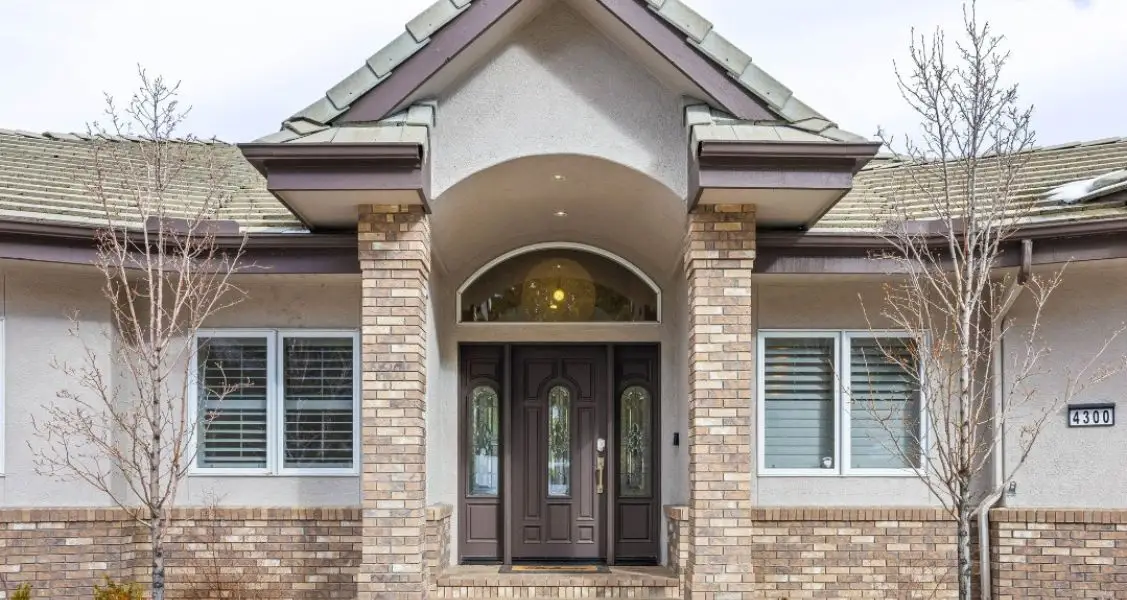
Value a vacation rental on its net income: NOI ÷ cap rate, checked against cash-on-cash return, sold comps and a full year of seasonality, not one peak month.
The short answer: a vacation rental is worth what its net income supports, checked against what similar homes actually sell for. Take a full year of rent, subtract every operating cost except the mortgage to get net operating income (NOI), and divide by a market cap rate. Then test that figure two ways: with the cash-on-cash return you would earn with your real loan, and against sold comparables. Where those numbers disagree, and in resort towns they often do, the gap is what you are paying for location, appreciation and your own use of the house.
This guide walks through each method with a worked example, lists the costs owners most often leave out (occupancy tax, channel fees, snow, reserves), and explains how permits change what a rental is worth. We manage 41 homes around North Lake Tahoe, so the local examples come from Placer and Washoe counties, but the math works anywhere.
This is general information, not tax, legal or investment advice. Talk to a CPA, a lender and a licensed agent before you buy.
Vacation rental valuation at a glance
| Metric | Formula | What it tells you |
|---|---|---|
| Occupancy rate | Booked nights ÷ available nights | How often it books. Count owner nights and blocked nights separately. |
| ADR (average daily rate) | Rent revenue ÷ booked nights | What a night actually sells for, after discounts. |
| RevPAR | Rent revenue ÷ available nights (or ADR × occupancy) | The best single number for comparing two rentals. |
| NOI | Rent revenue − operating expenses (no mortgage) | What the property earns before financing. |
| Cap rate | NOI ÷ price | Unlevered yield. Compare it with your mortgage rate. |
| Income value | NOI ÷ target cap rate | What the income alone justifies paying. |
| Cash-on-cash return | Annual cash flow after debt ÷ cash invested | What your own money earns in year one. |
| GRM (gross rent multiplier) | Price ÷ gross rent | Quick screen only. It ignores costs. |
| Total ROI | (Cash flow + loan paydown + appreciation) ÷ cash invested | The whole return, including what you can't spend yet. |
What does it mean to value a vacation rental?
A primary home is valued almost entirely on comparable sales: what did similar houses nearby sell for? A vacation rental is two things at once. It is a house, which a non-renting buyer would pay a certain amount for, and it is a small lodging business, whose value depends on the income it can legally produce. A good valuation looks at both and tells you which one is setting the price.
In markets with cheap houses and steady demand, the income usually sets the price. In scarce, high-priced places like Lake Tahoe, the house value is often higher than the income alone would justify, because buyers are also paying for the lake, for future appreciation and for the weeks they plan to use it themselves. Neither is wrong. You just need to know which you are buying.
Step 1: Build a real income number
Most bad valuations start with a bad revenue estimate. Build yours from evidence, month by month.
Where to get income data you can trust
- The seller's platform payout reports. Ask for 24 months from Airbnb, Vrbo and any direct-booking system. Payout reports show what actually arrived, after discounts and cancellations.
- The seller's occupancy tax returns. Counties require rental operators to report taxable rent. In Placer County (Kings Beach, Tahoe City, Carnelian Bay and the rest of the California North Shore) that is the transient occupancy tax; in Washoe County (Incline Village, Crystal Bay) it is the room tax. Filed tax returns are much harder to inflate than a spreadsheet.
- Owner statements from the current manager, if there is one. Ask for the statements, not a summary.
- Competitors' calendars and prices. Pick five to ten similar homes (same bedrooms, similar location and amenities) and track their booked nights and nightly prices through the year.
- Paid market data (AirDNA and similar tools) is useful for spotting trends, but it estimates bookings from listing calendars, and blocked nights can look like bookings. Use it as a cross-check, not as your income.
Take occupancy tax and pass-through fees out of revenue
Transient occupancy tax is the guest's money. You collect it and send it to the county. In North Lake Tahoe that is 10% in Placer County (8% countywide plus 2% for North Lake Tahoe, per Placer County), plus a Tourism Business Improvement District assessment, and 13% room tax in Washoe County. Remove all of it before calculating income. Do the same with cleaning fees if the whole fee is paid out to the cleaner. Count rent as revenue. Money that just passes through you to someone else is not income.
Model every month, not the peak
Mountain and lake markets have sharp seasons. At Tahoe, summer and the ski season carry the year, while late spring and late fall are slow. If you annualize a strong July or a holiday week, you can overstate a year's revenue by a wide margin. Build twelve monthly rows (nights available, expected booked nights, expected ADR) and add them up. Also subtract the nights you plan to use yourself.
Step 2: List every operating expense
NOI includes everything it costs to run the rental, except the mortgage and income tax. These are the lines owners most often miss:
- Channel fees. Airbnb moved listings managed through property management software to a host-only service fee of about 15.5% of the booking in late 2025, instead of the old split of roughly 3% host and the rest from the guest (Airbnb service fees). Vrbo's pay-per-booking model is a 5% commission plus 3% payment processing, as of 2026. Direct bookings avoid these but carry card-processing fees.
- Management. Use a written quote from the manager you would actually hire. Rates and what they include vary a lot, so compare the service list, not only the percentage.
- Cleaning and laundry, if not fully covered by the guest cleaning fee.
- Utilities and connectivity: power, propane or gas, water and sewer, trash, internet, streaming.
- Property tax. In California, Proposition 13 sets the base rate at 1% of assessed value plus local voter-approved charges, and a buyer is reassessed at purchase price (Board of Equalization). In Nevada, annual increases on a tax bill are capped at 3% for a primary residence and at up to 8% for most other property, including second homes (Washoe County Assessor). Look up the actual bill.
- Insurance. Get a real quote for a short-term rental policy before you make an offer. Wildfire risk has made coverage harder to get and more expensive in parts of the Sierra.
- Snow removal at mountain properties, including roof and deck clearing where needed.
- Repairs and maintenance, including hot tub service if there is one.
- Supplies, linens and guest consumables.
- Permits, inspections and licensing. For example, on Placer County's program page in September 2026 the STR application fee was $326.02 and the interior fire and life-safety inspection $507.02 in the North Tahoe fire district (Placer County STR program). Fees change, so check the current schedule.
- HOA dues and any HOA rental fees. See our Incline Village HOA guide.
- Replacement reserve. Furniture, mattresses, appliances, the hot tub cover and eventually the roof all wear out faster with guests. Set money aside every year.
Step 3: The income approach (cap rate method)
The cap rate method turns a year of NOI into a value:
Value = NOI ÷ cap rate
The cap rate you divide by should come from similar rental properties that actually sold, with known income. That data is thin for single-family vacation rentals, which is why the income approach should be checked against comps and cash-on-cash, not used alone. A lower cap rate means buyers accept less income per dollar, usually because they expect appreciation or value the location. A higher cap rate means more income per dollar and usually more risk or less appreciation.
Worked example (hypothetical numbers)
Every number below is a made-up round figure chosen to show the math. It is not a Tahoe average, a projection for any home, or MG's performance or fees. Replace each line with real quotes and records.
A three-bedroom home listed at $1,200,000. The rental records show 160 booked nights a year at an average of $800 a night after discounts.
| Line | Example amount | Note |
|---|---|---|
| Rent revenue (160 nights × $800) | $128,000 | Occupancy tax and pass-through cleaning fees already removed. 160 ÷ 365 = 44% occupancy. |
| Channel and payment fees | −$12,800 | Placeholder 10% blended across channels |
| Management | −$25,600 | Placeholder 20% only, not any company's rate. Use your quote. |
| Utilities, internet, trash | −$9,000 | |
| Property tax | −$13,200 | About 1.1% of price, a California-style placeholder |
| Insurance | −$6,000 | Get a real quote |
| Snow removal | −$4,000 | |
| Repairs and maintenance | −$6,000 | |
| Supplies and linens | −$3,000 | |
| Permits and inspections | −$1,000 | |
| Replacement reserve | −$5,000 | |
| NOI | $42,400 |
Cap rate at the asking price: $42,400 ÷ $1,200,000 = 3.5%.
Income value at a 6% target cap rate: $42,400 ÷ 0.06 = about $707,000.
GRM: $1,200,000 ÷ $128,000 = 9.4.
So in this example the income alone supports roughly $707,000, but the house is priced at $1.2 million. The extra $493,000 is what a buyer would be paying for the location, expected appreciation and personal use. That can still be a reasonable purchase, but it is not a purchase the rental income pays for, and you should know that before you sign.
Cash-on-cash return with a loan
Same example, bought with 25% down:
- Cash in: $300,000 down + $15,000 closing costs + $60,000 to furnish = $375,000
- Loan: $900,000 over 30 years at a hypothetical 7.25%. Freddie Mac's weekly survey put the average 30-year fixed rate at 7.03% on September 24, 2026 (Freddie Mac PMMS); loans on second homes and investment property are often priced higher. Payment is about $6,140 a month, or $73,675 a year.
- Cash flow: $42,400 − $73,675 = −$31,275
- Cash-on-cash return: −$31,275 ÷ $375,000 = −8.3%
That is negative leverage: the property yields 3.5% before financing while the loan costs over 7%, so every borrowed dollar loses money. Paid in cash, the same house returns about 3.3% on the $1,275,000 invested ($42,400 ÷ $1,275,000). Year-one principal paydown (about $8,700 here) and any appreciation add to total ROI, but you cannot spend either until you refinance or sell.
The lesson from the example is the general rule: when the cap rate is below your borrowing rate, the rental will not carry the mortgage, however good the location.
Step 4: Check against sold comparables
Next, look at what similar homes sold for in the last 6 to 12 months: same area, similar size, bedrooms, lot, view, condition and, critically, the same permit situation. A licensed agent can pull sold comps from the MLS. The county assessor's records show sale history, lot size and building details (Washoe County Assessor, Placer County Assessor).
Be careful with small-town medians. Places like Incline Village or Tahoe Vista close few sales a month, so one or two lakefront sales can swing a monthly median by hundreds of thousands of dollars. Compare individual sales, not headline medians. Automated estimates from Zillow or Redfin do not know rental income, permit status or operating costs.
Step 5: Discounted cash flow for longer holds
If you plan to hold for five or ten years, a discounted cash flow (DCF) puts all of it in one number: each year's cash flow, a realistic sale price at the end, minus selling costs, discounted back at the return you require. It is the most complete method and the easiest to fool yourself with, because small changes to the growth rate or exit price move the result a lot. Run a pessimistic case next to your base case.
How permits and rules change a vacation rental's value
A rental's income only counts if the home can legally earn it. Before you use any rental income in a valuation, confirm for the exact parcel:
- Is a permit available, and does it transfer? Placer County caps its eastern-county STR permits at 3,900, not counting owner-occupied homes, and once the cap is reached new non-owner-occupied rentals are limited to 30-night minimum stays (Placer County). Washoe County requires a permit for Incline Village and Crystal Bay under Code Chapter 110, Article 319 but has no numeric cap. Other Tahoe jurisdictions are capped and waitlisted. Check the current ordinance; these rules have changed several times since 2021.
- How many guests are allowed? Occupancy limits cap how large a group you can book, which caps ADR. See our occupancy rules guide.
- What does the HOA allow? CC&Rs can ban or restrict rentals regardless of county rules.
- What must be installed? Bear-resistant trash enclosures, fire extinguishers, defensible space and parking are all permit conditions at Tahoe. Budget for them.
Our Lake Tahoe STR permit guide covers the process step by step.
Best vacation rental investment markets for 2026, and whether a ranking helps you
Many people searching for how to value a rental are also looking at national "best markets" lists. The most cited is AirDNA's. Its 2026 top ten, published January 27, 2026, is led by Port Arthur and Abilene, Texas, and averages about a $296,000 home price, $40,500 in annual revenue potential and yields near 14% (AirDNA release). Those markets rank high because houses are cheap relative to rent, driven largely by work and medical travel, not vacations.
A ranking tells you where income is high relative to price. It says nothing about the specific house you are looking at. Use the steps above on the property itself. For how Lake Tahoe compares with other leisure markets, see best vacation rental investment markets.
Are vacation rentals a good investment?
They can be, when the numbers and the rules both work. They tend to work best when:
- the purchase price is reasonable relative to proven income, so the cap rate is near or above your borrowing cost;
- the permit is secure and the jurisdiction's rules are stable;
- demand spreads across more than one season;
- you have budgeted realistically for management, maintenance and reserves;
- you value what the income does not capture, such as your own weeks at the house and long-term appreciation, and can afford to carry the property if rental income dips.
They go wrong when a buyer assumes peak-month income all year, forgets occupancy tax and channel fees, or buys a home that cannot get a permit.
Tax points to raise with your CPA
- The 14-day rule. If you use the home as a residence and rent it for fewer than 15 days a year, you do not report the rent and do not deduct rental expenses (IRS Topic 415).
- Personal-use limits. If your personal use is more than the greater of 14 days or 10% of the days rented at a fair price, the IRS treats it as a residence, which limits deductible rental expenses (IRS Publication 527).
- Short average stays. Rentals with very short average stays can be treated differently from long-term rentals under passive-activity rules. Ask your CPA how that applies to you.
- State income tax. Nevada has no state personal income tax. California taxes rental income from California property, including for owners who live out of state.
Common mistakes when valuing a vacation rental
- Treating occupancy tax or pass-through cleaning fees as income.
- Using a projection instead of the seller's payout reports and tax returns.
- Annualizing peak season.
- Forgetting the new owner's property tax reassessment (California) or current tax bill (Nevada).
- Leaving out channel fees, snow removal and a replacement reserve.
- Assuming the seller's permit transfers.
- Borrowing at a rate above the property's cap rate without planning for the negative cash flow.
When to hire an appraiser
A lender will order its own appraisal for a loan, and it will usually value the property as a house using comparable sales, not its rental income. For partnership buyouts, estate matters or disputes, hire an independent certified appraiser. For your own buy or sell decision, the income and comps work above, checked with a local agent, is usually what matters most. Re-run it every year and after any major change: a new permit rule, a remodel, an added bedroom or a new hot tub.
Get a second opinion on a North Lake Tahoe rental
If you own or are buying a home between Incline Village and Tahoma, we can go through what it would take to rent it here: permits, occupancy limits, what the house needs, and how we run it. We do not give income projections for homes we haven't seen. See Tahoe property management or Incline Village property management, or contact us. If you are still looking for the right house, Real Estate Tahoe, our sister brokerage, can pull sold comps and permit history for any listing. For the local market itself, read investing in North Lake Tahoe vacation rentals.
Questions
How do you value a short-term rental property?
Start with net operating income: a full year of rent, minus every operating cost except the mortgage. Divide it by a cap rate that fits the market to get an income value. Then check that number against recent sales of similar homes and against the cash-on-cash return you would earn with your actual financing.
What is a good ROI on a vacation rental property?
There is no single number. The useful test is whether the property's cap rate is higher than your borrowing rate. If it is lower, every borrowed dollar costs more than it earns and your cash-on-cash return falls as you add debt. Many resort areas, Lake Tahoe included, trade at cap rates below today's mortgage rates, so buyers there are also paying for appreciation and personal use.
How do I estimate vacation rental income before buying?
Ask the seller for 24 months of platform payout reports and the transient occupancy tax returns they filed, which are harder to inflate than a projection. Then compare booked nights and nightly rates against similar homes' calendars, and build the estimate month by month so the slow seasons are counted.
Is occupancy tax part of rental income?
No. Transient occupancy tax (TOT) is collected from the guest and paid to the county. Take it out of gross bookings before you calculate income, or the property will look more profitable than it is.
Can I use a Zestimate or Redfin estimate to value a rental?
Only as a rough check on what the house would sell for to a buyer who does not rent it. Those estimates do not know the rental income, the permit status or the operating costs, so they cannot tell you what the rental business is worth.
Do permits affect a vacation rental's value?
Yes, heavily. In capped jurisdictions a permit may not transfer to a buyer, and a home that cannot get one is worth only what a non-renting buyer will pay. Confirm the permit rules for the exact parcel before you use any rental income in a valuation.