South Lake Tahoe Vacation Rental Policy
Updated September 30, 2026 · 9 min read
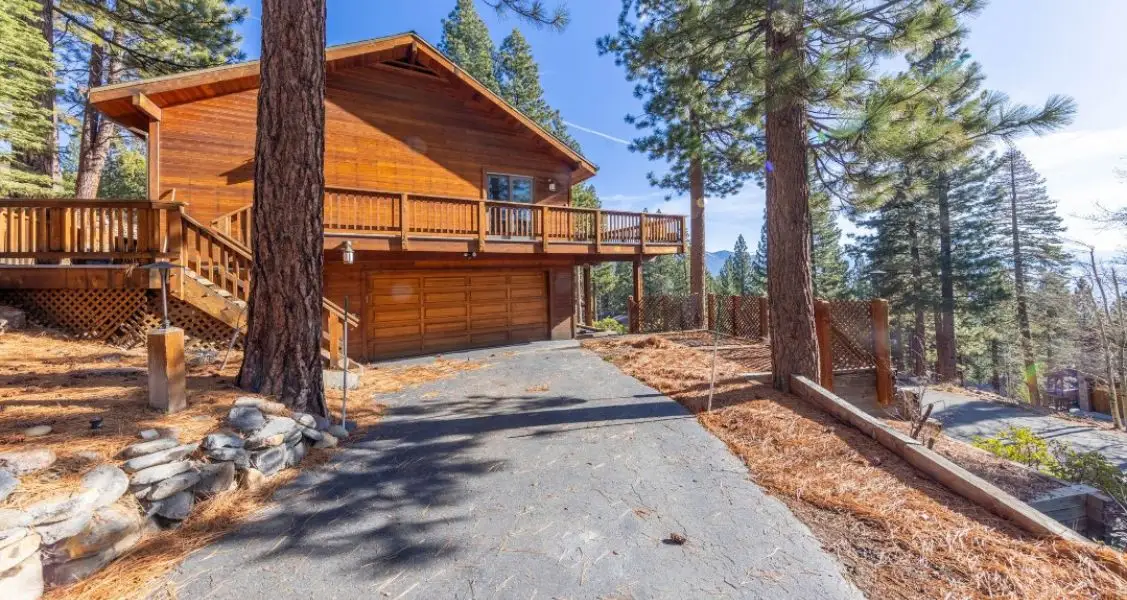
Since April 23, 2026 South Lake Tahoe allows VHRs citywide but caps residential areas at 900 permits and waitlists new ones. El Dorado County adds a 500-ft buffer map.
South Lake Tahoe allows vacation home rentals again, citywide, but new permits in residential neighborhoods are now waitlisted. After a judge struck down Measure T in March 2025, the City Council adopted Ordinance 2026-1203, which took effect April 23, 2026. It caps vacation home rental (VHR) permits in residential areas at 900, and on August 21, 2026 the city began placing new residential applications on a waitlist as it neared that cap. The Tourist Core and commercial zones are not capped. Outside the city, unincorporated El Dorado County has its own 900-permit Tahoe Basin cap plus a 500-foot buffer between rentals.
One note before the details: MG Vacation Rentals doesn't manage homes in South Lake Tahoe. We're based on the North Shore, where our 41 homes are, about an hour's drive around the lake. This guide is for owners and buyers trying to understand the South Shore rules. It is general information, not legal advice. Every figure is from the city or county source linked beside it, as of September 30, 2026.
South Lake Tahoe short-term rental rules at a glance
| Item | City of South Lake Tahoe (as of Sep 2026) |
|---|---|
| Ordinance | Ordinance 2026-1203, adopted March 24, 2026, effective April 23, 2026 (City Code Chapter 3.50, Article V) |
| Where VHRs are allowed | Citywide with a permit; not in multifamily dwelling units |
| Residential cap | 900 permits; new residential applications waitlisted from Aug 21, 2026 |
| Tourist Core and commercial | No cap |
| Fees (residential) | $548 application; $670–$3,485 annual, by occupancy; $285 inspection; $165 re-inspection |
| Occupancy (residential) | 2 per bedroom, plus up to 5 children aged 13 and under; 4 people per paved parking space, whichever is lower |
| Quiet hours | 10 p.m.–8 a.m.; outdoor hot tubs closed during those hours |
| Residential extras | Property manager required; renter must be 25+; indoor noise and outdoor video monitoring; 60-minute in-person response |
| Renewal | Annual, within 30 days before expiration |
| Contact | vhr@cityofslt.gov, cityofslt.gov VHR page |
From Measure T to the 900-permit cap
The city has regulated vacation rentals since 2003. The history that matters to owners today, as the recitals of Ordinance 2026-1203 set it out:
- November 6, 2018: voters pass Measure T, a citizens' initiative that phased out VHRs in residential zones, multifamily dwellings and areas added to the Tourist Core after 2017. Those rentals were phased out by the end of 2021.
- 2021 onward: the Superior Court and the Court of Appeal uphold most of Measure T, but send one question back: whether its "permanent resident" exception discriminates against out-of-state owners.
- March 13, 2025: the El Dorado County Superior Court rules that exception unconstitutional and not severable, striking Measure T down in its entirety. The council votes not to appeal.
- April 1 to June 19, 2025: a temporary moratorium on new permits in the areas Measure T had closed.
- June 17, 2025: the council passes Ordinance 2025-1200, reopening those areas to VHRs with a 150-foot buffer between rentals.
- March 24, 2026: the council adopts Ordinance 2026-1203, replacing the buffer with a cap of 900 permits in residential areas. It takes effect April 23, 2026.
- August 21, 2026: the city starts waitlisting new residential applications as it approaches the cap.
If you read older articles, including an earlier version of this one, that say rentals are "banned" in South Lake Tahoe neighborhoods, or that you must be a permanent resident renting 30 days a year, those describe Measure T, which no longer applies.
Residential areas vs the Tourist Core
Most of the new rules turn on whether a property is in a "residential area." The ordinance defines that as land zoned residential, excluding the Tourist Core Area Plan, the Tahoe Valley Area Plan, the Sierra Tract commercial plan area, the South Y Industrial Tract, Bijou/Al Tahoe Community Plan districts 1 to 4, and parcels zoned for recreation. Use the city's zoning and location lookup to see where an address falls.
In residential areas, the cap, the waitlist and the extra operating rules below all apply. Outside them, there is no cap, the bedroom-based occupancy is higher, and the lighter standards apply.
South Lake Tahoe VHR map and permit lookups
Three maps answer most questions, and they're the ones people search for:
- City of South Lake Tahoe VHR map: the city's issued permit dashboard shows where permits are active.
- City zoning lookup: the location check map shows whether an address is in a residential area or the Tourist Core.
- El Dorado County VHR map: for addresses outside the city, the county's buffer map, updated nightly, shows active rentals and the 500-foot buffer around each one.
How to get a South Lake Tahoe vacation rental permit
- Check the zone and the waitlist. In a residential area, a complete application joins the waitlist in the order it was deemed complete. In the Tourist Core or a commercial zone, it is processed directly.
- Apply online. Applications go through the city's VHR permit portal. The application asks for the home's square footage, bedrooms and number of paved parking spaces, and in residential areas the property manager's details. Incomplete applications not fixed within 30 days are withdrawn.
- Pass the inspection. The city inspects every residential-area home before issuing a permit, aiming to schedule within 14 days of a complete application, using its inspector's checklist. You then have 45 days to finish any required fixes, or the application is withdrawn. The city issues no more than 150 permits a month.
- Pay fees and register for tax. Pay the permit fees, register for transient occupancy tax, and report room nights with each TOT payment.
- Post and publish. Post the permit and conditions inside the home. Every ad must show the city permit number, and residential-area ads must state that the home is in a residential area subject to enhanced regulations.
- Renew every year. Permits expire annually and must be renewed within the 30 days before expiration.
The city lists residential-area fees as a $548 application fee, an annual permit fee of $670 to $3,485 depending on occupancy, a $285 inspection and a $165 re-inspection. Questions go to vhrpermittech@cityofslt.gov or (530) 230-0242.
Occupancy, parking and operating rules
Occupancy
Occupancy is the lower of the parking number and the bedroom number, and it counts everyone on the property at any time. Parking allows four people per paved space (one space for 4, two for 8, up to five for 20), and each space must be at least 9 by 19 feet. The bedroom number is two per bedroom in residential areas (a studio is 2) and two per bedroom plus four outside them (a studio is 4). Up to five children aged 13 and under don't count, or two in a studio. Our maximum occupancy guide has the full tables and compares them with the North Shore counties.
Rules for every city VHR
- No commercial activity: no weddings, receptions or large parties.
- Quiet hours 10 p.m. to 8 a.m., including outdoor equipment, and outdoor spas and hot tubs closed during those hours.
- Guests park only in designated spaces.
- Trash goes in the bear box if the property has one, or in an animal-resistant cart. The city can require an animal-resistant recycling cart within 30 days of notice.
- Interior signage with the permit, the maximum occupancy, parking and trash rules, and notice that occupants can be cited.
- Transient occupancy tax on every stay, with room nights reported.
Extra rules in residential areas
- A property manager must be designated at all times.
- The manager checks in each group, in person or virtually, verifies the identity of the responsible party, confirms they are 25 or older, and has them sign a good neighbor contract, kept for three years.
- Indoor noise monitors and outdoor video monitoring that alert the manager 24/7.
- A local contact number answered 24/7, and a manager who can respond in person within 60 minutes.
Condos and HOAs
Condominiums can hold VHR permits unless they're in a common interest development whose HOA has adopted a short-term rental prohibition under California Civil Code section 4741. Multifamily dwelling units can't be vacation rentals at all.
Enforcement and penalties
Violations are a public nuisance and subject to citation in amounts the City Council sets by resolution. Occupants as well as owners can be cited for occupancy, noise, hot tub hours, parking and trash violations. The city can cite on photo, video or audio evidence from a neighbor who signs an affidavit. A permit is revoked when three upheld citations are issued from three separate events within 24 months, or if the owner falls behind on transient occupancy tax, and appeals go to a hearing officer. Reports use the city's VHR complaint form.
Hosted rentals
If you live in the home and rent part of it, that's a hosted rental under City Code section 6.55.295, a separate permit with a $281 application. It isn't subject to the VHR cap, but read its performance standards before you apply.
El Dorado County short-term rentals outside the city
Meyers, Christmas Valley and the unincorporated South and West Shore are regulated by El Dorado County under County Code Chapter 5.56 (current ordinance adopted November 21, 2024). The county FAQ, revised April 6, 2026, says:
- There is a 900-permit cap in the Tahoe Basin and, on top of it, a countywide 500-foot buffer. Parcels within 500 feet of an active VHR can only join the waitlist ($141, non-refundable).
- A new VHR application is $564 plus a $31 technology fee and a fire inspection fee based on square footage. Renewals are $282.
- Permits last one year. The local fire department inspects safety and defensible space every other year.
- Permits don't transfer to buyers, and a home must be rented at least 10 nights a year to keep one.
- No accessory dwelling units, detached guest houses, RVs or tents as VHRs. No events.
- At least two on-site parking spaces. No outdoor wood or charcoal fires.
- The local contact must live within half an hour and resolve complaints within 30 minutes. Quiet hours are 10 p.m. to 8 a.m.
- Renting without a permit means a fine and a one-year bar on applying or joining the waitlist.
Complaints go to the county's VHR hotline at (530) 573-7999.
Stateline and the Nevada side
Stateline, Kingsbury, Zephyr Cove and Round Hill are in Douglas County, Nevada, not El Dorado County. Douglas caps vacation home rentals at 600 permits in the Tahoe Township and limits the share of rentals in each neighborhood, with a waitlist when either limit is reached. See the county's VHR program for the neighborhood density viewer. Our Lake Tahoe short-term rental permit guide compares every jurisdiction around the lake.
Buying in South Lake Tahoe to rent: a checklist
- City or county? Meyers and Christmas Valley are unincorporated El Dorado County, and Stateline is in Douglas County, Nevada. Each has a different program, so confirm which one covers the address.
- Which zone? In the city, check the zoning lookup. A residential-area home faces the waitlist. A Tourist Core or commercial-zone home doesn't face a cap.
- Buffer? In the county, check the 500-foot buffer map. A parcel inside a buffer can only join the waitlist.
- Don't count on the seller's permit. It won't transfer to you in the city or the county.
- Count bedrooms and paved spaces. Occupancy in the city is the lower of two per bedroom and four per paved space, and it sets your annual fee.
- Condo? Check whether the HOA has adopted a short-term rental prohibition, and remember multifamily units can't be VHRs at all.
- Budget for residential-area extras. A property manager, noise and video monitoring, and 24/7 in-person response within 60 minutes.
- Watch the rules. The city adopted four VHR ordinances between April 2025 and March 2026. Follow the city's VHR page and council agendas before you close.
If you're a guest booking in South Lake Tahoe
A legal city rental shows its permit number in the listing, and residential-area listings say they're in a residential area with enhanced rules. Expect the manager to check you in and confirm the lead guest is at least 25, cameras outside, noise monitors inside, hot tubs closed after 10 p.m., and parking limited to the paved spaces. Our North Lake Tahoe vs South Lake guide compares the two shores if you haven't decided where to stay.
Considering the North Shore instead
If you're buying a Tahoe home to rent part-time, the North Shore works differently. Washoe County, which covers Incline Village and Crystal Bay, has no cap on permits, and Placer County, which covers Kings Beach through Tahoe City and Homewood, had not reached its 3,900 cap as of September 2026. Real Estate Tahoe, our sister brokerage, can check permit eligibility on a specific address before you offer. You can see the kind of homes we look after on our homes page.

If you own on the North or West Shore and want help with permits, listings and guests, see our Lake Tahoe property management and Incline Village property management pages, or contact us at (530) 317-0291.
Questions
Are vacation rentals allowed in South Lake Tahoe in 2026?
Yes. A court struck down Measure T on March 13, 2025, and the city's new Ordinance 2026-1203 took effect April 23, 2026. It allows vacation home rentals citywide with a permit, caps residential areas at 900 permits, and leaves the Tourist Core and commercial zones uncapped. Multifamily units still can't be vacation rentals.
Can I get a South Lake Tahoe vacation rental permit now?
In residential areas, new applications go on a waitlist: the city announced on August 21, 2026 that it would waitlist them as it approaches the 900-permit cap. In the Tourist Core and commercial zones, you can apply without a cap. Check the city's zoning lookup map for your address.
How much is a South Lake Tahoe VHR permit?
The city lists a $548 application fee, an annual permit fee from $670 to $3,485 depending on occupancy, a $285 inspection fee and a $165 re-inspection fee for residential areas. Hosted rentals have a separate $281 application. Check the city's VHR page for current fees.
Where is the El Dorado County VHR map?
El Dorado County publishes a buffer map, updated nightly, showing active vacation home rentals and the 500-foot buffer around each one in the unincorporated county. The City of South Lake Tahoe publishes its own map of issued permits and a zoning lookup. Links are in the map section of this guide.
Does a VHR permit transfer when I buy a South Lake Tahoe home?
No. In the city, any change of ownership requires a new application, and in residential areas that means joining the waitlist while it is open. In unincorporated El Dorado County, permits don't transfer to new owners either, and the 500-foot buffer applies to the new application.
Does MG Vacation Rentals manage homes in South Lake Tahoe?
No. MG has no homes in South Lake Tahoe. We manage 41 homes in Incline Village, Crystal Bay and on the North and West Shore, about an hour's drive around the lake.
What are El Dorado County's short-term rental rules?
Outside the city, El Dorado County regulates vacation home rentals under County Code Chapter 5.56. As of its April 2026 FAQ, the Tahoe Basin is capped at 900 permits with a 500-foot buffer between active rentals, so many parcels can only join the $141 waitlist. A new application is $564 plus fees, permits last one year and don't transfer to buyers, and homes need two on-site parking spaces, a local contact within 30 minutes and quiet hours from 10 p.m. to 8 a.m.